
Project S.U.C.C.
Level Designer
Super Ultra Critter Control is a third-person action-adventure game, in which you use your trusty vacuum cleaner to defeat enemies and solve puzzles. Pick up any objects you can find in your adventure to clear the infestation and save the city.
Personal Responsibilities
Explored and defined core gameplay loop.
Created the setting and wrote the narrative of the game.
Sketched and presented ideas within the team.
Designed and iterated on level mechanics and lay-out.
The Inspiration
Player Fantasy
< Explain our player fantasy, and how it was inspired by Skylanders and Kirby and the Forgotten Land. >
We set out to create a light-hearted action-adventure game based all around your trusty vacuum cleaner. The player uses their vacuum cleaner to interact with everything in the world, using it to clear debris on their path and defeat enemies in their way. Our experience should feel intuitive and satisfying to play.
References
< Show architectural references, the genius loci. >
Design Pillars
< List our design pillars and their meaning. >
Playful Teaching
The player should be taught all core mechanics of our game in a playful manner. It should feel natural, and not forced.
Fuck Around, Find Out
The player should be encouraged to interact with the various objects in the level. They should discover the different effects for themselves.
Dynamism
The level should offer many dynamic elements, from basic objects to core level mechanics. At every moment, there should be something to interact with using the vacuum.
Building the World
Narrative Outline
< Explain the story of the game in broad strokes: the setting, worldbuilding, progression, etc. Could use our project bible as a reference.
Deeper dive into the setting. Show concrete examples of how I incorporated the narrative in the level. >
“Skyport City” has been infected by disgusting bugs. These bugs have hit core infrastructure which has slowed down operations significantly. The city has hired you, a random employee of a pest control company, to clear out the infestation and bring order to the city.
“Skyport City” exists of two major parts: The Skyport, which I developed, and the City, which my partner Alexandra Făsui developed.
Layout & Structure
< Show the lay-out and structure of the Skyport and how it flows into the city section, developed by Alexandra Făsui. >
Block-Outs & Iterations
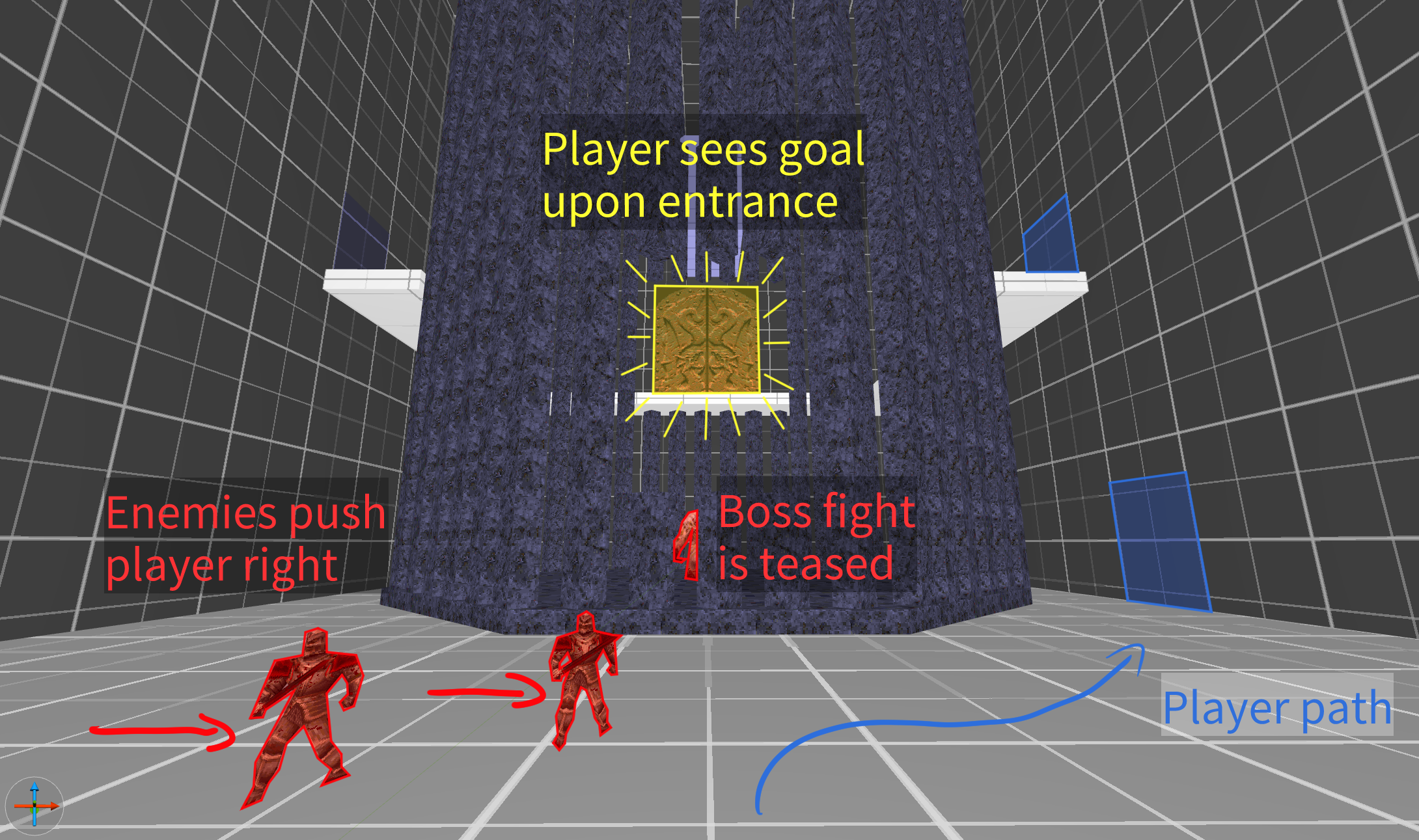
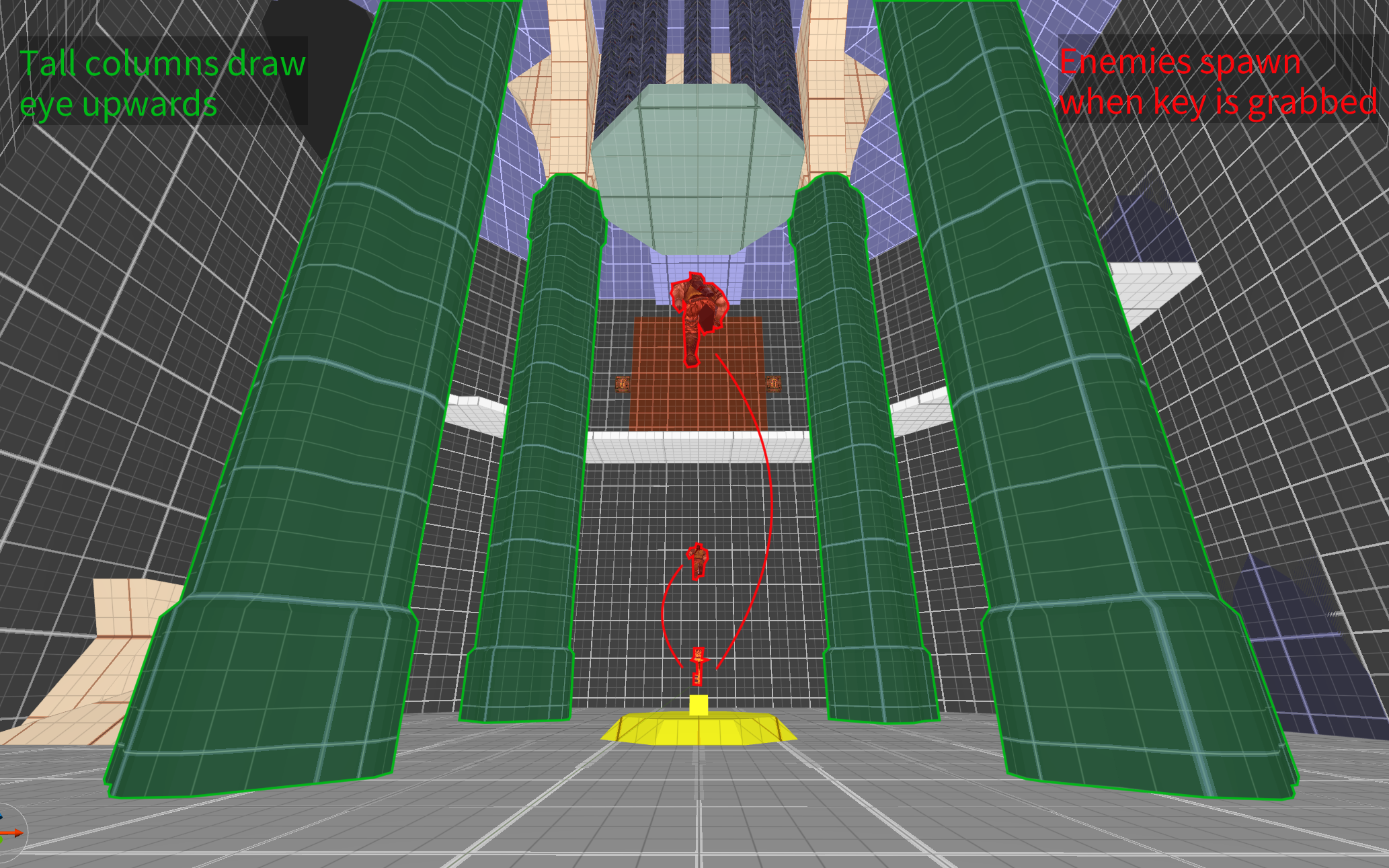
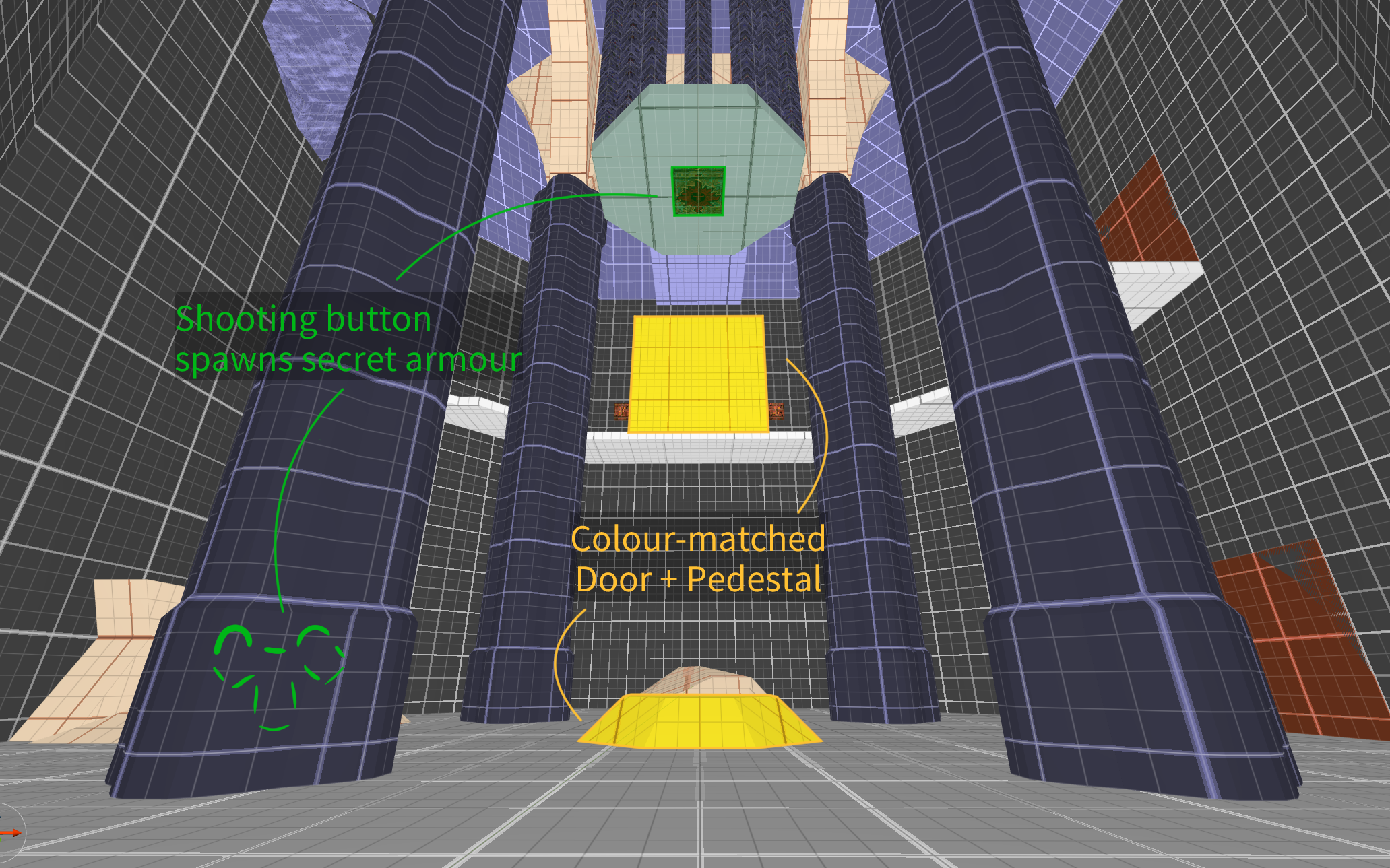
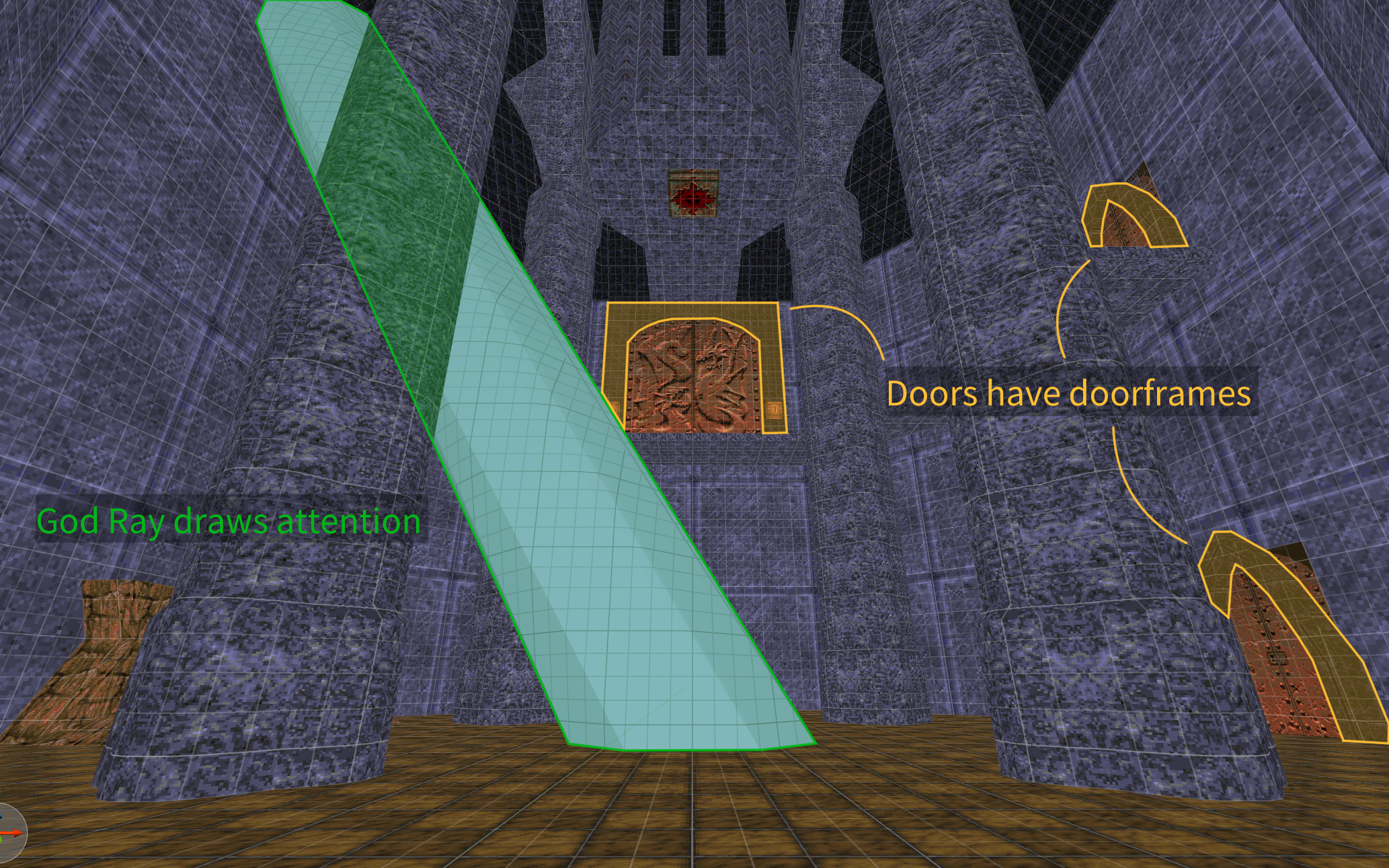
<show block-outs and iterations like on The Eclipsed Sanctum>




Design Techniques
< Show how I applied landmarks, leading lines, framing, visual leashing, Steiner points, architectural ally, alternative architecture, >
< Also describe how I taught the player the game’s mechanics: Montessori method, skill gates >
Modularity & Scripting
< Show modular kit and scripted sequences >
< Show Gym level >
Teamwork Makes the Dream Work
Designers
< Describe how I worked together with other designers on the project: level design buddy Alexandra Fasui, 3Cs designer Alessandro van der Nadort, tool designer Larisa Sirbu, UI artist Adrian Kowalik (visual leashing?), boss designer Damy op den Kamp (level structure), lead designer Simoen Gospodinov (assisted him with his lead duties) >
Programmers
< Describe how I worked together with programmers: Ivo and Allen on iterative process on level mechanics >
Artists
< Describe how I worked together with artists: environment artists on the look & feel of the level, placement of assets, lighting etc. Show before and after, concrete examples >
External Audio Team
< Describe how I helped external audio designers and composers Roelof Lastname and Valentin Joudrier: providing worldbuilding, narrative outline >
Hear It From My Teammates:
-
![]()
Jelko Luiten - Procedural Artist on Inferno
Max is super enthusiastic and fun to work with. He keeps everyone together and facilitates teamwork. He addresses the feedback that he receives with a positive outcome.
-
![]()
Bojan Petkovksi - Animator on Inferno
Max has a very enthusiastic presence. He's very passionate and dedicated, which positively encourages the team spirit. I applaud his decision to take the producer role on Inferno. It shows his initiative and adaptability in favour of the team.
-
![]()
Kylian Schuilenburg - Gameplay Programmer on Inferno
Max keeps an open mind and adjusts to others' feedback. He's on top of his tasks, but also asks others for input when needed. We were always thinking together, and he effectively pushed the project forward.
-
![]()
Iliya Karadzhinova - Environment Artist on Inferno
Max is a nice and helpful person. He communicates with all disciplines and keeps the team on track. He’s got an eye for the small things and pays attention to everyone. This reflects in his feedback, which is constructive and personal in a good way.
-
![]()
Mara Pop - Concept Artist on Inferno
From the past year studying with him, I can see that Max has grown a lot. He spends a lot of time with other developers. He sees the good in people and ensures that everyone is at comfort. The vibe, workflow and feedback were all there. No one in our team ever needed to panic, which was mediated by him. He goes out of his way to take feedback from other experts in his field and applies it well. It's clear that he's always willing to improve.
-
![]()
Daan Derkx - Procedural Artist on Inferno
He gives really good feedback, and also nicely communicated feedback from stakeholders with the team.
-
![]()
Simeon Gospodinov - Technical Designer on Inferno
Very motivated and team-oriented. Max doesn't just conduct himself properly but also makes sure the entire team is making steady and healthy progress.


Retrospective
Working on The Eclipsed Sanctum was an exceptionally insightful experience, with many learnings along the road, from big to small.
The concepting phase was the hardest of them all. I cannot stare at a blank canvas, but I’ve found different ways to inspire myself. I’ve learned how to put my ideas on paper, using visuals when necessary, to effectively communicate my intentions with peers.
Working in TrenchBroom, whilst daunting at first, was a delight. Learning about all the tools and pushing the limits of the engine was a challenging yet rewarding process. From scripting, to lighting, to modelling and texturing, every part of the process was a different beast to tackle, but was made accessible thanks to the help from the Quake Mapping community.
The constraints of the engine fostered my creativity and forced me to come up with creative solutions to unique problems. With every playtest, the quality of the level gradually improved, and more smiles - or should I say fears - appeared on players’ faces.
Going through the full process, from concepting to lighting and texturing, helped me get a better understanding of the full level design pipeline, which will prove valuable in future projects!


Reception